Discover a professional 3D printing powder supplier

Metal Strength Smackdown: 3D Printing vs. CNC Machining!

(is 3d printed metal as strong as cnc)
Ever wonder if that cool 3D printed metal part is as tough as one made the traditional way? You are not alone. The question “Is 3D printed metal as strong as CNC?” pops up constantly. It is a big deal for engineers, designers, and anyone needing strong metal parts. This is not just about the machines. It is about the final product’s muscle. We are diving deep into the battle of strength: additive manufacturing versus subtractive machining. Get ready for a clear breakdown.
1. What is 3D Printed Metal and CNC Machining?
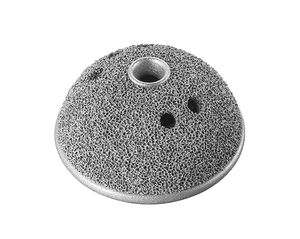
First, let us understand the players. 3D printed metal, or metal additive manufacturing, builds parts layer by layer. Think of a printer, but instead of ink, it uses metal powder or wire. A heat source like a laser or electron beam melts the material. It fuses it together precisely. This builds the object from the ground up. Popular methods include Selective Laser Melting and Direct Energy Deposition.
CNC machining is the opposite approach. CNC stands for Computer Numerical Control. It is a subtractive process. You start with a solid block of metal. Think aluminum, steel, or titanium. Powerful machines like mills and lathes then cut away material. They use sharp rotating tools. The computer controls the tool paths exactly. This carves out the desired shape from the solid block. It is like sculpting metal.
So, one method adds material, the other removes it. This fundamental difference impacts everything. It affects the material structure, the surface finish, and yes, the strength.
2. Why Compare Their Strength?
Strength matters. It really matters. When you design a part, strength is often a top priority. A bracket holding an engine? It needs to be strong. A critical aircraft component? Strength is non-negotiable. Medical implants inside the body? Absolutely must be strong and reliable.
Comparing 3D printed metal to CNC machined metal is crucial for several reasons. Design freedom is a big advantage of 3D printing. It can make complex shapes impossible with CNC. But is that intricate shape strong enough? Cost is another factor. 3D printing can sometimes be cheaper for complex parts. But only if the strength meets requirements. Material waste differs too. CNC cuts away metal, creating chips. 3D printing uses only the material needed. This is more efficient. Yet, the strength of the printed part must justify the method.
Understanding the strength difference helps choose the right tool. It ensures parts perform safely and last. We cannot assume they are equal. We need real data.
3. How Do They Measure Up?
This is the heart of the matter. Is 3D printed metal as strong as CNC? The answer is: it depends. It is complicated. Let us break it down.
Generally, a well-made CNC part from a solid block has very high strength. The metal is dense. It has a consistent grain structure. This often leads to excellent mechanical properties. Think high tensile strength and good fatigue resistance.
3D printed metal parts can also be very strong. However, their strength depends heavily on the process. The machine settings matter a lot. The quality of the metal powder matters. The skill of the operator matters. Good printing produces dense parts. The layers fuse together perfectly. These parts can match CNC strength. Sometimes they even exceed it in certain directions.
But problems can happen. Porosity is a big one. Tiny voids or bubbles inside the printed metal. This weakens the part. Inconsistent melting between layers is another issue. This creates weak spots. The heat from printing affects the metal’s microstructure. This can change its properties.
Post-processing is key for 3D printed metal. Heat treatment like Hot Isostatic Pressing is common. This process applies high heat and pressure. It squashes internal voids. It makes the metal denser and stronger. It improves the grain structure. After good HIP treatment, many 3D printed metals get much closer to CNC strength. Machining the surface afterward also helps. It removes any rough outer layer. It improves fatigue life.
So, top-quality 3D printed metal, with proper post-processing, can rival CNC strength. But achieving this requires expertise. Not all printed parts start out equally strong.
4. Where Do They Shine?
Both technologies have their sweet spots. They excel in different applications. Strength is important, but other factors matter too.
CNC machining shines when you need the absolute highest strength. Especially from common metals like aluminum or steel. It is perfect for parts with simple to moderately complex geometries. If surface finish is critical right off the machine, CNC often wins. Think engine blocks, transmission parts, structural beams. These often come from CNC. It is also the go-to for very large production runs. The speed and consistency are hard to beat.
3D printed metal offers unique advantages. Its superpower is complex geometry. Think internal cooling channels inside a turbine blade. Think lightweight lattice structures impossible to machine. Think consolidating many parts into one printed piece. This reduces assembly points. It can actually improve overall strength. It is great for prototypes. It allows quick design changes. It excels for custom, one-off parts. Like bespoke medical implants perfectly fitting a patient’s bone. Aerospace loves it for complex, lightweight components. The fuel savings are huge. The material efficiency is another plus. Less waste. The ability to repair high-value parts by adding material is also valuable. In these cases, achieving sufficient strength with 3D printing unlocks these benefits. Often, the strength is perfectly adequate for the job.
5. Your Burning Questions Answered
Let us tackle some common questions head-on.
Can 3D printed metal parts be as strong as forged parts? Forged parts are exceptionally strong due to their dense grain structure. High-quality 3D printed metal, especially after HIP, can approach forged strength. But forging often still holds the edge for the most demanding applications.
Is the strength the same in all directions for 3D printed metal? Often, no. This is called anisotropy. The layer-by-layer build process can create slight differences. Strength might be slightly higher along the layers versus between them. Good printing practices minimize this. Post-processing like HIP helps even it out. CNC parts are usually isotropic. Strength is the same in all directions.
Does the metal type affect the strength comparison? Absolutely. Some metals print better than others. Titanium alloys and certain nickel superalloys are stars in metal 3D printing. They achieve strengths very close to their CNC counterparts. Other metals might be trickier. The choice of alloy impacts achievable strength for both methods.
How much does post-processing improve 3D printed strength? Post-processing is vital. Heat treatments like HIP can significantly boost strength. They enhance ductility. They reduce internal stresses. Surface machining improves fatigue life. Without proper post-processing, 3D printed parts often fall short of CNC strength. With it, they get much closer.
When should I choose CNC over 3D printing for strength? Choose CNC if you need the absolute maximum possible strength. Especially for simpler shapes. Or when using standard alloys where CNC is proven. Choose CNC for large volumes requiring consistent top-tier strength. If surface perfection right off the machine is critical, CNC is often better. If cost is less important than guaranteed peak strength, CNC might be the answer.
(is 3d printed metal as strong as cnc)
When should I consider 3D printed metal? Choose 3D printing for complex, lightweight designs. Choose it for parts impossible to machine. Use it for low-volume production. Or for rapid prototyping. Use it when design flexibility trumps squeezing out every last drop of strength. Use it when material efficiency or part consolidation offers big advantages. If the required strength is achievable with printing, its other benefits can win out.